
CAN PIMPLE PATCHES HELP WITH RAZOR BUMPS?
A Dermatologist Explains — by Dr. Sharleen St. Surin-Lord, MD, FAAD
Quick answer: Yes — hydrocolloid and niacinamide pimple patches can meaningfully calm individual razor bumps (pseudofolliculitis barbae) by reducing inflammation, absorbing fluid from irritated follicles and protecting the area from picking and bacteria. They are not a cure and don’t stop new bumps from forming, but they’re one of the most effective on-the-spot tools available while you build a full razor bump treatment plan — including, eventually, permanent hair reduction.
If you shave, tweeze or wax and end up with itchy, painful bumps a day or two later, you’re dealing with a real, well-documented skin condition — not just “bad luck” with a razor. Below, a board-certified dermatologist walks through what’s actually happening in the skin, what the current evidence-based treatments are and exactly how The Skin Doctor’s® patches fit into a smart razor bump routine.
What Are Razor Bumps, Really?
“Razor bumps” is the common name for pseudofolliculitis barbae (PFB), a chronic inflammatory reaction that happens when a shaved & plucked hair curls back & re-enters the skin instead of exiting the follicle normally. The body treats the trapped hair like a foreign object and mounts an inflammatory response — resulting in the painful, itchy papules and pustules most people call bumps. PFB is a chronic inflammatory disorder of follicular and perifollicular skin characterized by papules, pustules, and post-inflammatory hyperpigmentation, and it occurs frequently in men of African and Asian descent. This is largely because PFB predominantly affects people with tightly curled, coarse hair, which is more likely to curve back into the follicle after cutting.
Left untreated or repeatedly irritated, PFB can progress beyond a temporary annoyance. It can lead to complications such as infection or scarring, and dark marks are especially noticeable in deeper skin tones — which is exactly why calming each bump quickly and protecting the skin barrier while it heals matters as much as preventing new ones.
Current Razor Bump Treatments: A Balanced Look
Dermatology has several well-studied approaches to PFB. A balanced treatment plan commonly combines more than one of these.
- Shaving and grooming changes. The most effective approach to PFB involves behavioral changes in shaving habits combined with topical therapy and most patients can successfully manage PFB simply by adjusting their grooming routine and using topical or systemic treatments. This includes shaving in the direction of hair growth, using a single-blade razor and not shaving too closely.
- Topical anti-inflammatories. Topical acne treatments such as benzoyl peroxide and tretinoin are commonly used to suppress the follicular hyperkeratosis that contributes to PFB and oral antibiotics like tetracyclines may reduce inflammation. Topical corticosteroids, antibiotics and benzoyl peroxide have also been shown useful — alone or in combination — for moderate to severe inflammation.
- Soothing compresses. Warm water, saline and Burow's solution compresses for about 10 minutes can help soothe inflamed skin and remove crusting.
- Chemical depilatories. Depilatory creams are another option for preventing PFB, though they can be irritating for some skin types.
- Light and laser-based therapy. Photodynamic therapy and Nd:YAG laser epilation are additional options dermatologists use and when other anti-PFB treatments aren't giving satisfactory results, laser therapy is considered a viable option that can provide a lasting cure.
What’s missing from most of these lists, though, is what to do the morning a bump shows up — something you can reach for immediately, without a prescription, that won’t interfere with the rest of your routine. That’s where pimple patches come in.
The Long-Term Gold Standard: Laser Hair Removal and Electrolysis
To be transparent and balanced: if razor bumps are a recurring problem for you, laser hair removal and electrolysis are genuinely the best long-term solutions, because they address the root cause — the hair itself — rather than just calming each flare-up.
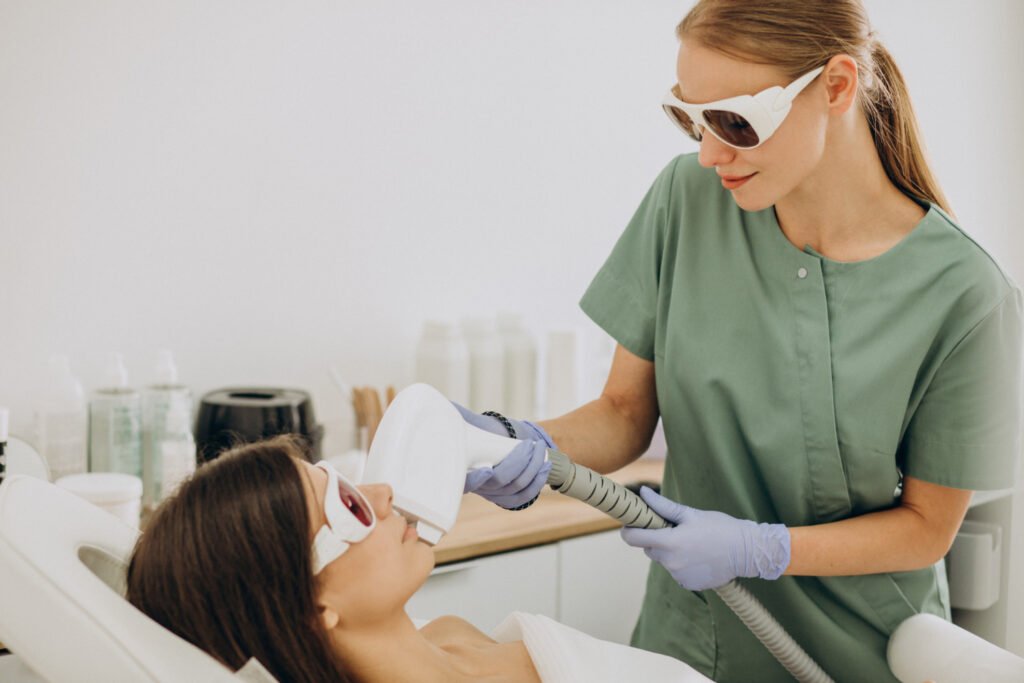
- Laser hair removal targets pigment in the hair follicle to progressively damage and miniaturize it over a series of sessions, reducing the number of hairs that can curl back into the skin in the first place. Long-pulsed Nd:YAG lasers in particular have been studied specifically in deeper skin tones (Fitzpatrick types IV–VI), where PFB is most common and dermatology reviews note this laser as well-suited for melanin-rich skin because it targets deeper follicular structures with less risk to surface pigment.
- Electrolysis treats each follicle individually with a fine probe & electrical current, permanently destroying the hair's growth center. It works on all hair colors and skin tones, making it a reliable option regardless of hair pigment.
The tradeoff is real, though: both require a course of appointments with a qualified provider, an upfront or ongoing financial investment and — for laser — some prior clearance for your specific skin tone and hair color. That gap between “I know I need this” and “I have the appointment booked and the bumps are gone” is exactly where a good bridge strategy matters.
While You Wait: Where Pimple Patches Fit In
Whether you’re on a waitlist for a laser hair removal consult, still saving toward a treatment package or simply not ready to commit to a multi-session plan yet, you still have to get through the bumps you have today. This is where The Skin Doctor’s® patches were designed to help — as a smart, dermatologist-created bridge, not a replacement for definitive treatment.
Here’s the mechanism, in plain terms:
100% Hydrocolloid Patches
Hydrocolloid is a wound-care material — the same technology used on blisters and pressure sores — made of gel-forming agents like carboxymethylcellulose and pectin. When applied over an inflamed lesion, the hydrophilic, colloidal dispersion properties of hydrocolloid form an absorptive, hydrating, protective layer and the resulting viscous layer even supports the skin’s innate immune response by activating immune cells such as granulocytes and monocytes.
For a razor bump specifically, that translates to three practical benefits:
- It draws fluid out of an irritated or pustular bump, similar to how it draws exudate from a popped pimple.
- It keeps the area moist, which promotes processes like autolytic debridement, collagen synthesis and keratinocyte migration across the skin surface — all part of faster, cleaner healing.
- It creates a physical barrier against your fingers (no picking), your razor and outside bacteria, while the bump calms down.
In a small randomized, double-blind trial, hydrocolloid patches dressings produced a statistically significant greater reduction in inflammation and lesion severity over three to seven days compared with standard skin tape, along with significantly greater improvement in redness, oiliness and dark pigmentation. That last point — pigmentation — matters enormously for razor bump sufferers, since post-inflammatory dark marks are often the most stubborn part of the problem.
Niacinamide-Infused Patches
Niacinamide (vitamin B3) is one of the most studied calming, brightening actives in dermatology and layering it into a patch adds an active-ingredient boost on top of the hydrocolloid mechanism. The evidence base here is specifically relevant to razor bumps because PFB’s aftermath — redness and dark spots — is a form of post-inflammatory hyperpigmentation (PIH):
- Niacinamide inhibits the expression of pro-inflammatory cytokines like IL-1β, IL-6 and TNF-α, which helps reduce inflammation-driven hyperpigmentation.
- Niacinamide is basically a cosmetic ingredient with proven clinical efficacy for acne and even for post-inflammatory hyperpigmentation, working via effects on pigment transfer pathways in the skin , so it kind of helps where the discoloration comes from .
- In a controlled study on a related form of inflammatory hyperpigmentation, topical niacinamide patches produced a significant colorimetric (measurable) improvement in hyperpigmentation compared with placebo.
In short: a 100% hydrocolloid patch is the workhorse for an actively inflamed, fluid-filled razor bump — think of it as first aid. A niacinamide-infused patch is the better choice once the bump has calmed but a dark or red mark remains, or for bumps that are irritated but not weeping — giving you an anti-inflammatory, pigment-supporting boost while it protects the area.
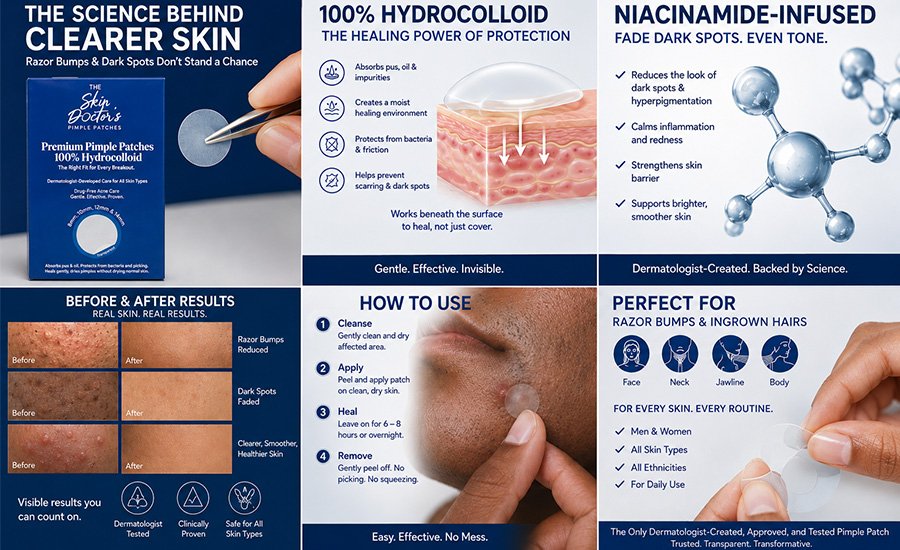
How to Use Pimple Patches on Razor Bumps
- Cleanse the area gently and pat completely dry — hydrocolloid needs a dry surface to adhere and function properly.
- Choose your patch: 100% hydrocolloid for an active, inflamed or fluid-filled bump; niacinamide-infused for calming redness and residual dark marks.
- Apply directly over the bump and leave on for several hours or overnight; the patch will turn opaque/white as it absorbs fluid — that is a sign it’s working.
- Avoid layering other active treatments (retinoids, benzoyl peroxide) underneath the patch at the same time, since the patch can absorb them before they reach the skin.
- Keep making your regular shave technique adjustments, and if bumps show up commonly, hurt, or end up leaving lasting scars, dark marks, or worse—go see a board-certified dermatologist.
Frequently Asked Questions
Do pimple patches actually work on razor bumps?
Yes, for individual, actively inflamed bumps. The hydrocolloid patches help pull in the fluid and keep things in a kind of moist mending setting, and that’s what clinical research ties to less inflammation and better pigmentation, compared with leaving it alone or using normal-taped options. They don’t really stop fresh bumps from popping up, though, because they don’t actually change the way the hair comes back.
Are pimple patches a replacement for laser hair removal or electrolysis?
No. Laser hair removal and electrolysis are the only treatments that address the root cause of PFB — the hair regrowth pattern itself — and are considered the most effective long-term solutions. Patches are a symptomatic tool to use on active bumps in the meantime or alongside your ongoing treatment plan.
What's the difference between hydrocolloid and niacinamide patches for razor bumps?
100% hydrocolloid patches are best for bumps that are still kinda actively inflamed, with fluid, or just freshly irritated. Niacinamide-infused patches add a sort of calming anti-inflammatory, plus a pigment-fading active, and that is really handy once the bump has calmed down but you still see redness, or a dark mark hanging around.
Can pimple patches be used on ingrown hairs anywhere on the body?
Yes, the same idea applies. You can use hydrocolloid or niacinamide patches on ingrown-hair bumps on the bikini area, legs, underarms and honestly not only the beard region.
Will patches make dark marks from razor bumps go away?
They may help, especially with early post-inflammatory dark marks, because calming the inflammation can reduce the “staining” effect. But if the hyperpigmentation is older, or has been there a long time, it may need more—like dermatologist-guided brightening products or in-office options, depending on how stubborn it is.
Razor bumps are a real, medically recognized skin condition — and the most durable fix is addressing the hair follicle directly through laser hair removal or electrolysis. But healing doesn't have to wait for that appointment or that budget. The Skin Doctor's® 100% hydrocolloid and niacinamide-infused patches give you a dermatologist-created, science-backed way to calm individual bumps, protect the skin barrier and support fading of dark marks — right now, while you plan for the long-term solution.
References
- Kindred C, Halder RM. Pseudofolliculitis Barbae: A Review of Current Treatment Options. J Drugs Dermatol. 2019;18(3):246-250.
- Coley MK, Alexis AF. Pseudofolliculitis barbae; current treatment options. Clin Cosmet Investig Dermatol. PMC6585396.
- Perry PK, Cook-Bolden FE, Rahman Z, Jones E, Taylor SC. Pseudofolliculitis Barbae: Prevention and Treatment. US Pharmacist / Cutis. 2002.
- DermNet NZ. Pseudofolliculitis Barbae (Razor Bumps): Images and Management. dermnetnz.org.
- Sanova Dermatology. 4 Ways to Treat Pseudofolliculitis Barbae (Razor Bumps).
- Narrative Review of the Use of Hydrocolloids in Dermatology: Applications and Benefits. PMC11856799.
- Curology. Pimple patches, explained: How they help (and where they fall short).
- Sadler J, Kubiak M. Clinical Evaluation of Niacinamide in Hyperpigmentation and Barrier Repair. J Cosmo Trichol. 2025;11:308.
- Regulation of postinflammatory hyperpigmentation by niacinamide through potential modulation of the protease inhibitor, SERPINB3. J Am Acad Dermatol. 2021.
- Topical niacinamide 4% and desonide 0.05% for the treatment of axillary hyperpigmentation. Clin Cosmet Investig Dermatol. Dove Press.